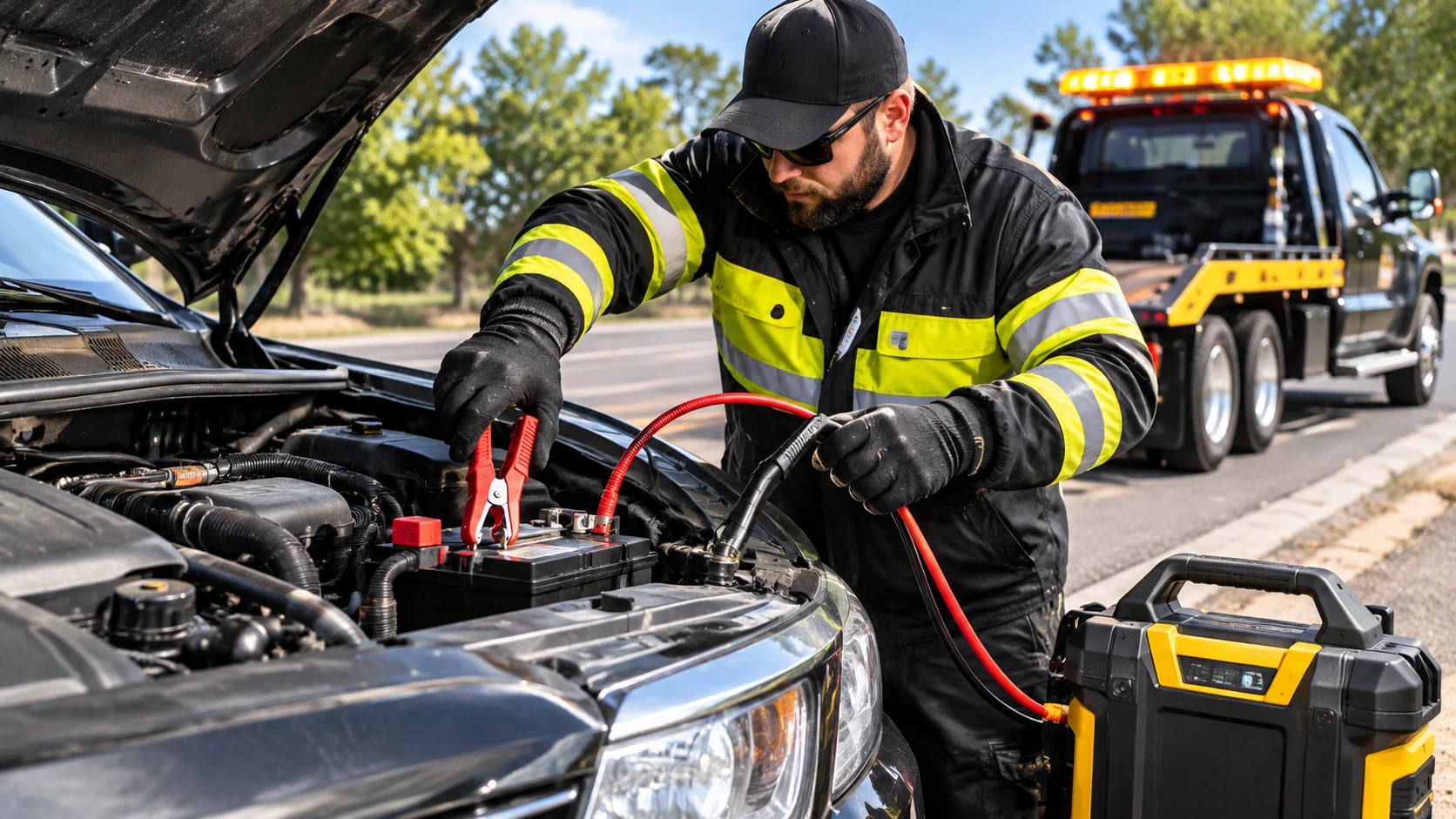
Signs a jump start will help
- Rapid clicking when you turn the key. The starter is trying, but the battery doesn’t have enough charge.
- Dim or flickering dash lights. Another common sign of a weak battery.
- Lights or accessories were left on. A classic overnight drain.
- The car sat unused for a while. Batteries discharge slowly on their own.
When a jump won’t fix it
If the engine cranks normally but won’t fire, the battery probably isn’t the problem. It could be fuel, ignition or something else. If the car dies again soon after a jump, the alternator may not be charging. In either case, a tow to a shop is usually the next step, and we can arrange that on the same call.
Austin heat is hard on batteries
Austin’s long, hot summers are tough on car batteries, and many drivers find out on the first cold morning. If your battery is several years old and needed a jump, have it tested soon so you’re not stranded again.
What to tell us when you call
What you hear
Clicking, slow cranking, or silence.
Your vehicle
Year, make and model, and where the battery is if you know.
Where you are
Address, parking lot and level, or highway and exit.
Anything unusual
Warning lights, a burning smell, or a swollen or leaking battery.
While you wait
Turn off headlights, the radio and AC so the battery isn’t drained further. If you smell something burning or see the battery leaking or swollen, don’t touch it, and tell us when you call.
Battery Jump Start questions
Is a jump start safe for my car’s electronics?
Done correctly, with the right clamp order and a properly sized booster, a jump start is routine for modern vehicles.
What if my car still won’t start after a jump?
Then the battery likely isn’t the only problem. We can arrange a tow to the shop of your choice on the same call.
How long should I drive after a jump?
Drive for a while, ideally 20 to 30 minutes, so the alternator can recharge the battery. Then have the battery tested soon.